Front-Pointing and Mixed Terrain Ice Climbing Protocols
Climbing steep vertical water ice and thin alpine veneers requires complete suppression of erratic, reflexive movements. On steep terrain, brute upper body grip force is a finite resource that dissipates within minutes. Sustainable icecraft is fundamentally an art of lower-body skeletal alignment, deliberate heel depression, and triangular weight distribution.
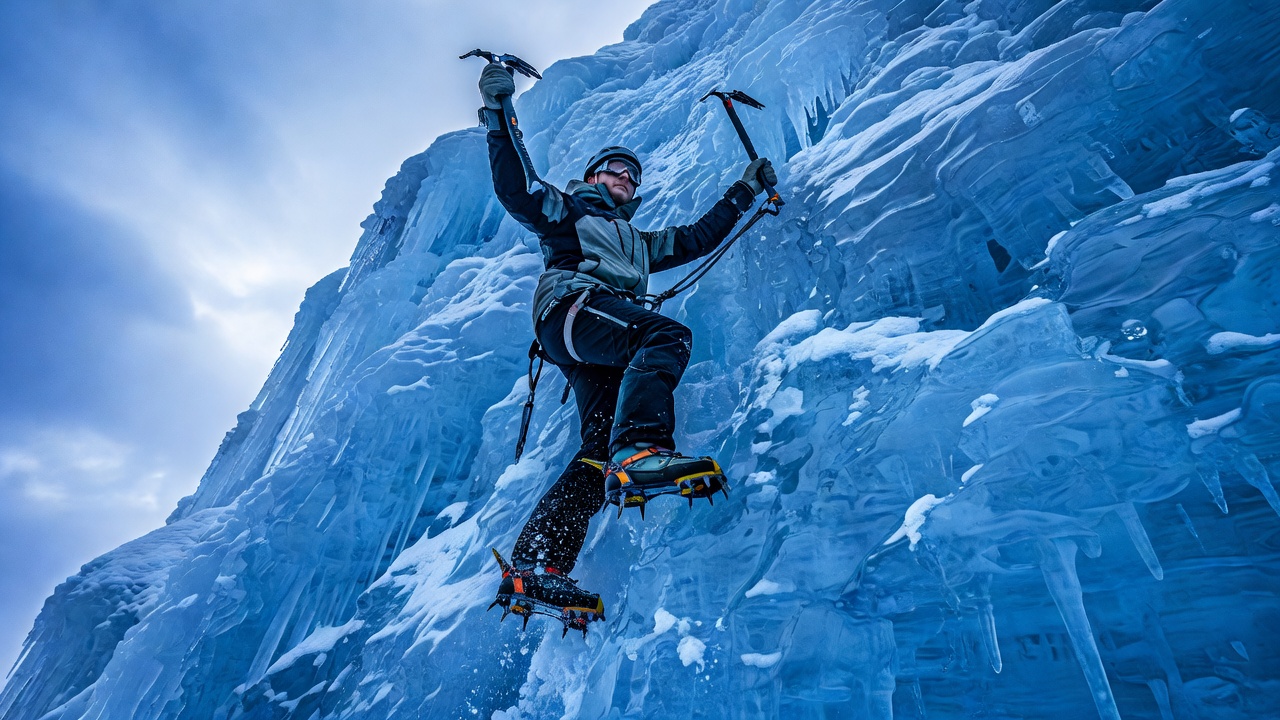
The Geometry of Stable Front-Pointing
Novice climbers frequently pull their heels upward on vertical ice, forcing the gastrocnemius calf muscle into an isometric burn that produces severe muscle tremors. By dropping your heels 5 to 10 degrees below horizontal, the secondary tines of rigid alpine crampons engage the ice structure, transferring your body weight directly through your skeletal tibia rather than through strained musculature.
The Triangle Movement Cadence
Adopt the fundamental tripod rule on every vertical section:
- Set the Upper Anchor: Drive a single technical ice axe securely overhead. Test placement with a sharp downward tug without shifting hips.
- Step Up Footwear (Left): Kick the left crampon into a natural ice depression. Drop the heel immediately to lock secondary teeth.
- Step Up Footwear (Right): Place the right crampon shoulder-width apart, parallel to the left foot. Stand up entirely over your boots.
- Advance Secondary Axe: Reach upward to place the secondary axe into an offset placement, reforming a stable climbing triangle.
Mixed Alpine Tooling and Rock Camming
Modern alpine ascents inevitably confront mixed pitches where water ice gives way to friable granite, verglas slabs, and chossy limestone fissures. Preserving pick longevity and stability requires specialized mixed tool mechanics.
| Mixed Technique | Substrate Context | Mechanical Action |
|---|---|---|
| Torquing | Vertical or diagonal cracks in granite | Insert pick into fissure and twist the tool shaft sideways; camming action locks teeth in place |
| Stein Pull (Reverse Mantle) | Undercling rock flakes and roofs | Drive pick upward against roof underside; pull downward on tool pommel to balance stance |
| Verglas Hooking | Millimeter-thin ice skin over smooth slab | Gently settle pick teeth behind ice dimples without swinging; avoid shattering thin ice bonds |
| Monopoint Precision | Sub-centimeter rock crystals and edges | Direct single front point onto edge; maintain constant perpendicular downward pressure |
Ice Screw Placement Dynamics
Protection in alpine ice requires flawless ice screw placement. Drive screws at a 10 to 15 degree angle upstream against the direction of pull in dense plastic ice. Always clear away brittle surface dinner-plates with the adze before starting the screw threads, ensuring that the hanger sits completely flush against solid, load-bearing black ice.